[Podcast] Do You Like the Person You’ve Become?

I know—that’s a heavy question. But all of us ask it of ourselves at some point, and I guarantee some of the people in your group are asking it right now. We come up with standards we think will make us into the person we want to be, but we end up feeling crushed beneath the weight of it all. So what hope is there when you feel like that? Listen to this week’s episode to find out.

Listen Now

(Episode length: 15 mins)

Show Notes

Main idea: There’s only one Person who can bear the weight of living.

All of us are trying to live up to something

  • The tendency today is to set up some standard for yourself then judge your value and self-worth based on how well you think you’re performing next to your standards
  • We’re all bound to something; we’re all trying to live up to something

The weight of living is crushing

  • When you make your performance the measure of your self-worth and value, then you will always be crushed beneath the weight
  • Every one of our life-lies can and will be taken from us at some point because everything in this life is temporary

Jesus can bare the weight

  • Jesus didn’t promise for us not to be yoked to anything—he promised to give us rest, relief, from the weight of living, if we yoke ourselves to him instead
  • Jesus alone can bear the weight of living

This is part of a podcast I do for group leaders at my church. Browse the archives for more.

How Do You Know Where God is Calling You?

If your heart has been gripped by the gospel, sooner or later you’ll find yourself asking, “Where is God calling me to go?” That’s a normal question, because the gospel that saves is also the gospel that sends. That doesn’t make it an easy question, though, because it creates all kinds of follow-up questions.

Does God want me to go overseas? Does He want me to quit my job and work for a ministry? Or does He want me to stay where I am when I thought it was clear I had to go?

Read the rest of my article at Gospel-Centered Discipleship for four questions and answers to help you discern where God is calling you.

[Podcast] What it Means to Follow Jesus

In the church, we talk a lot about “following Jesus,” or being a “Christ-follower.” But I fear that this is one of those terms we can hear so much that we become numb to what it actually means, or we assume we know what it means when we haven’t really thought much about it at all. When you look closely at what Jesus said, you might find that following him means something different than you thought.

LISTEN NOW

(Episode length: 18 mins)

Show Notes

Main idea: A disciple is one who responds in faith and obedience to the gracious call to follow Jesus Christ. Following Jesus is a lifelong process of dying to self while allowing Jesus Christ to come alive in us.

What “following Jesus” really means

  • The word “disciple” literally means learner, but in Jesus’ day that meant something closer to apprentice

A disciple responds in faith and obedience

  • Responding in faith to Christ, then, means we are assured, we are confident, in his promises of salvation, restoration, and eternal life
  • But responding to Christ’s call to follow him is not merely about faith – it’s also about obedience, or doing what Jesus tells us to do
  • If we have truly put our faith in Christ, then our inward transformation will have outward results

The gracious call to follow Jesus

  • We accept a gift that we graciously given to us by God through Jesus’ sacrificial death and resurrection (Eph. 2:1-10)

Following Jesus is a lifelong process

  • Following Jesus is a decision to enter into a pattern of recreating our lives to look more like his
  • God will see the work He began in us to completion (Phil. 1:6)

Dying to self while allowing Jesus to come alive in us

  • Jesus calls us to say no to ourselves so we can say yes to him
  • As we deny ourselves, we make more and more room for Jesus to take up residence in our hearts and minds


Download full transcript


This is part of a podcast I do for group leaders at my church. Browse the archives for more.

Facebook Can’t Replace Church

Mark Zuckerberg recently said he believes Facebook can become a force for community organization, much like churches or little league sports. His comments have prompted reflection on both the Church’s place amid a changing cultural, and the role of technology in organizing people. Some scoffed at Zuckerberg’s ambitions, while others asked if Facebook could indeed replace the Church.

Since the future is not for us to know, perhaps the best thing to do with comments like these is to see what they bring into focus and what they fail to see altogether. Lest we think church can easily be replaced, I’d like to turn the attention to what many inside and outside Christianity often fail to see in regards to the Church. God’s design for humans, where Christians find their meaning and the reality of the church’s mission provide us three reasons why Facebook (or any other institution) can’t replace church.

Read the rest of my article over at Relevant.

How Audio Scripture Speaks to the Heart

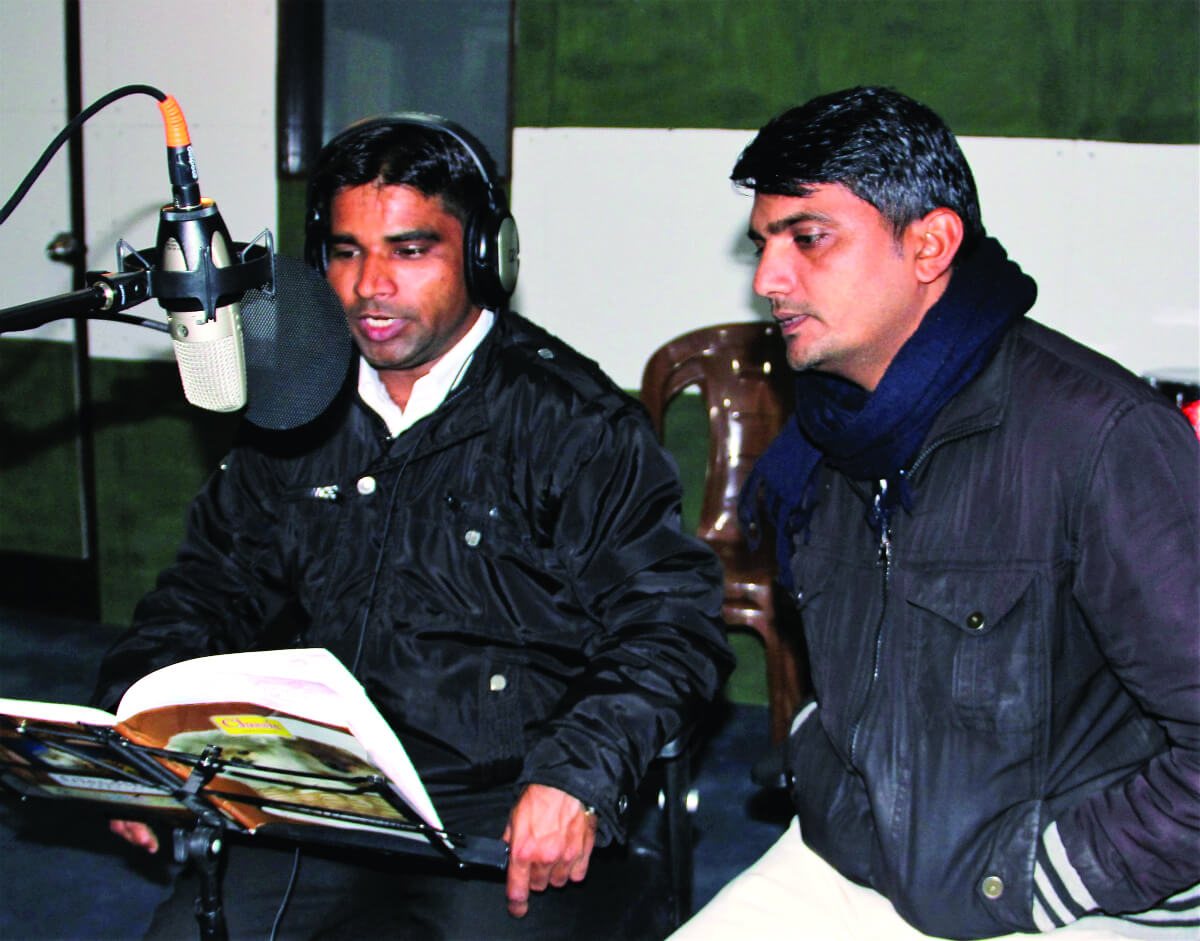
“This is amazing!” said Dante. “I am hearing [these] stories for the first time. I believe they are for me, too.”

Dante, whose parents named him for a Hindu god, grew up in a village that rejected Jesus and his message of salvation. But when Christians working at a recording studio in that Asian region needed help, they found Dante.

The team was ready to record Bible stories in the dialect of Dante’s people, but in this mostly non-reading community, they lacked speakers who could narrate the script. They hired Dante, a solid reader with a pleasant voice, to fill several roles in the Open Bible recordings. The Open Bible is a series of 50 stories spanning from Creation to the anticipated second coming of Christ. The audio recordings introduce Scripture to an oral culture where the Bible is available only in the national language, which is not the dialect this community understands easily.

But the Scripture stories began to reach Dante’s heart even before they were recorded.

Read the rest at JAARS’ Campaign for Possible website.